
Loading...
Serving Pleasanton, CA and surrounding areas. (925) 468-2460
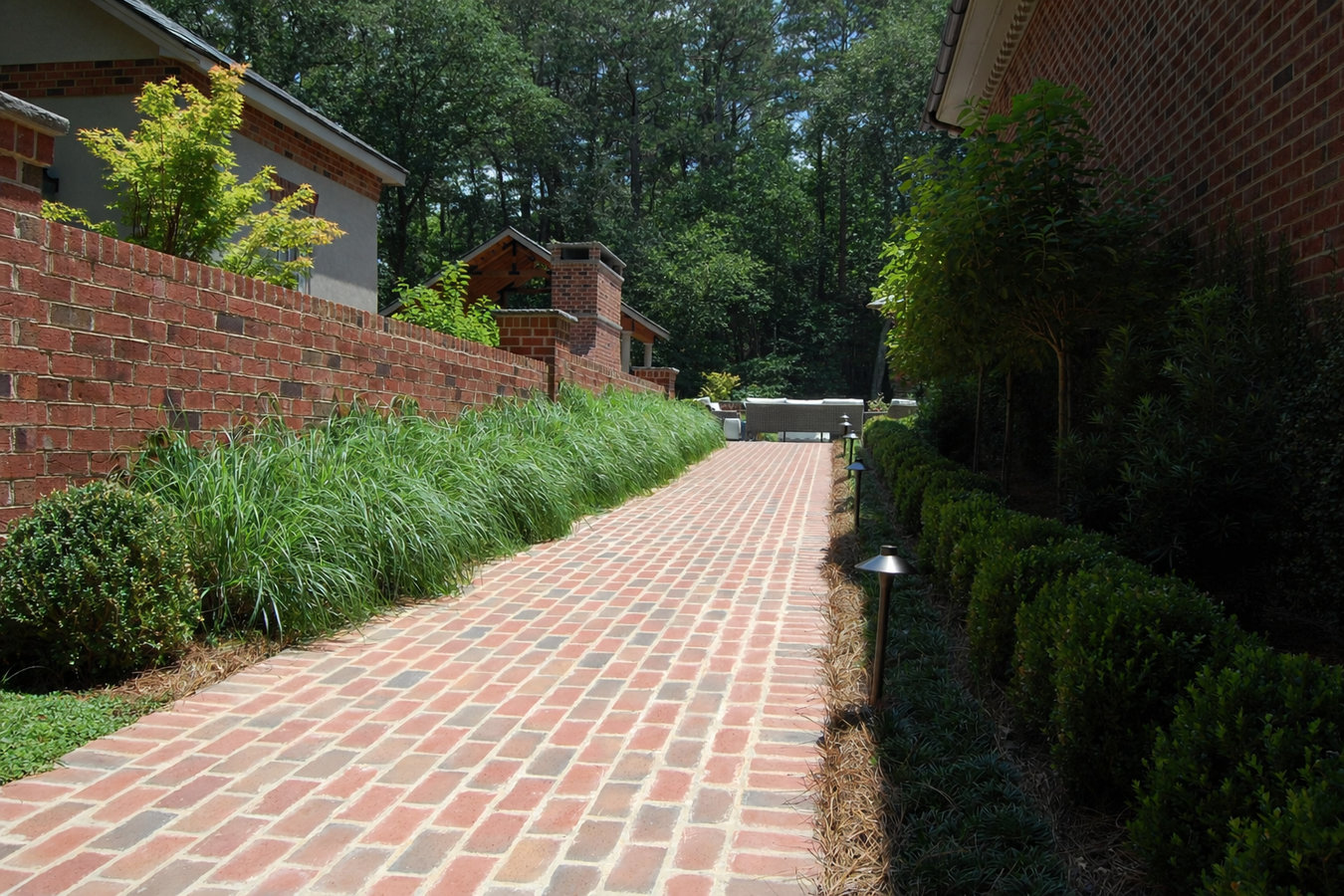
Cracked, uneven, or missing a front path? We build concrete, paver, and stone walkways in Pleasanton with the base depth and drainage that Tri-Valley soils actually require.
Walkway construction in Pleasanton starts with excavating the area to the correct depth, compacting a gravel base, and installing the surface material, most residential projects take one to three days depending on size and material.
If your front yard has no defined path or your existing concrete is cracked and rocking underfoot, the problem usually starts below the surface. Pleasanton sits on expansive clay soil that swells in wet winters and shrinks in dry summers - that movement is what cracks walkways that were not built with a deep enough base. Getting it right the first time means understanding the ground you are working with.
Many homeowners we work with are also considering driveway pavers at the same time, since both projects involve similar base work and it can save time and cost to schedule them together.
If cracks run across your walkway and are wide enough to see clearly, the surface has shifted enough that patching will not hold long. In Pleasanton, this is often caused by clay soil expanding and contracting through the wet-dry cycle. The base underneath has moved, and the whole walkway may need to be rebuilt rather than patched.
If any part of your walkway wobbles when you step on it, or you feel a noticeable dip between sections, the base has settled unevenly. This is a genuine trip hazard - especially for older family members or guests - and it tends to get worse over time rather than better.
After a winter rainstorm, water should drain off to the side of your walkway, not sit in puddles. Standing water means the drainage slope was not built correctly - or has shifted over time. It accelerates surface wear and works its way under the walkway to cause more serious damage.
If you have large trees nearby and sections of walkway are being pushed up from below, tree roots are the likely cause. This is common in Pleasanton's older neighborhoods where mature oaks and sycamores have had decades to spread. Once roots have lifted a walkway, the affected section needs to come out entirely.
We build three types of residential walkways, and each one starts with the same careful base preparation. If you are replacing a cracked surface, we remove what is there, excavate to the right depth, compact a gravel base layer, and then install the surface you choose. For homeowners who want to pair their new walkway with a fresh brick wall installation, we can often schedule both projects together to save time.
Each material has a different look, price point, and long-term maintenance profile. We walk through the trade-offs with every homeowner before any work begins, so you choose what makes sense for your yard, your HOA, and your budget. If you are also thinking about the approach from the street, we can discuss driveway pavers as part of the same scope.
Best for homeowners who want a clean, low-maintenance surface at the most affordable price point.
Best for homeowners who want design flexibility and the option to replace individual pieces if the ground shifts.
Best for homeowners who want a high-end look that complements an existing landscape or upscale exterior.
Pleasanton's clay-heavy soil is the single biggest factor in how we approach every walkway project. That soil expands when the winter rains come and shrinks back during the hot, dry summers - a cycle that puts constant pressure on anything set in the ground. A walkway built with a shallow base will show cracks within a few years here. We excavate deeper and use compacted gravel specifically to buffer against that movement, which is why our walkways hold their shape through multiple wet-dry cycles. Homeowners in Dublin and Livermore deal with the same soil conditions, and we bring that same approach to every job.
Drainage design also matters more in Pleasanton than in many parts of the country. Average annual rainfall of 16 to 18 inches falls almost entirely between November and April - and if a walkway is not sloped correctly, that water works its way under the surface and accelerates damage. We build a slight pitch away from your foundation into every walkway so water clears the surface quickly instead of pooling. Many of Pleasanton's older neighborhoods also have mature trees near front paths; where roots are a concern, we discuss barrier options and design choices that reduce the risk of future lifting.
Call or submit the contact form and we reply within one business day. We ask a few quick questions about the size, material preference, and whether there are trees or drainage concerns nearby.
We visit your property, check the soil, look for tree roots, assess current drainage, and measure the area. If a permit is required by the City of Pleasanton, we let you know here and handle the application for you.
The crew excavates to the correct depth, lays and compacts the base material, then installs the surface. A standard residential walkway typically takes one to two days on-site.
We walk the finished path with you, confirm drainage runs away from your home, and explain any care steps. All debris is removed before we leave.
Free on-site estimate. No obligation. We reply within one business day.
(925) 468-2460We excavate deeper and compact a gravel buffer specifically because Pleasanton soil moves with the seasons. Most walkway failures in this area come from a base that was not designed for local conditions - we build to avoid that from the start.
Every walkway we install is graded to move water away from your foundation. This is a detail that matters especially here, where 16 to 18 inches of annual rainfall falls in a short window. A flat walkway in Pleasanton is an invitation for surface damage and foundation moisture over time.
We know which walkway projects trigger a permit requirement through the City of Pleasanton and handle the application when one is needed. You do not have to figure out the process yourself, and your work is on record when you sell the home. The Interlocking Concrete Pavement Institute sets the installation standards we follow for paver work.
A large share of Pleasanton neighborhoods have HOA design guidelines that cover walkway materials and finishes. We are familiar with those guidelines and help you choose options that sail through the approval process the first time.
These are the details that separate a walkway that holds up for 25 years from one that cracks after the first rainy season. When you call us, you get a contractor who builds for the specific conditions in Pleasanton - not one who applies a generic approach that works fine in places with stable sandy soil.
Add a durable brick boundary or garden wall that complements your new walkway and holds up through Pleasanton's seasonal soil movement.
Learn MorePair your new walkway with a paver driveway for a unified hardscape look from the street to your front door.
Learn MoreReach out now to lock in your start date and get a free, written estimate for your walkway project.